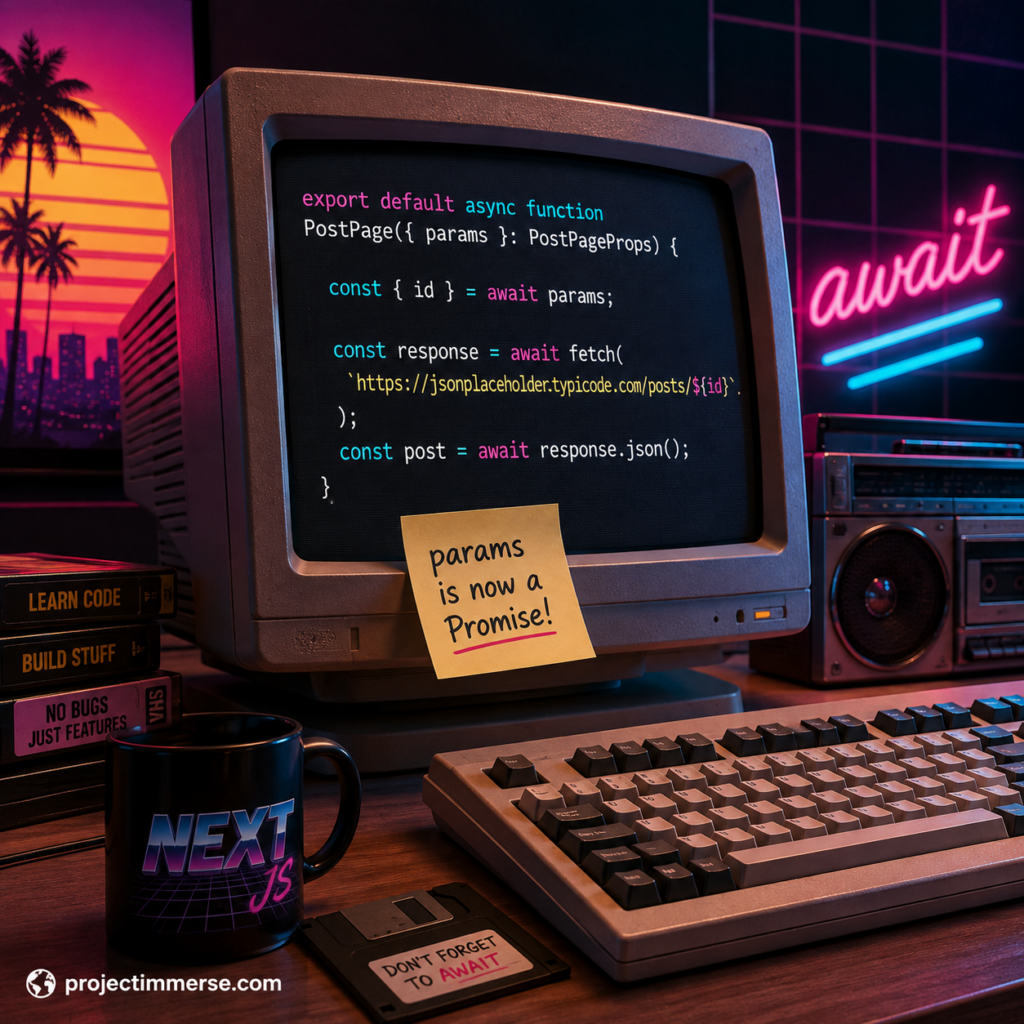
Why Next.js Suddenly Wants You to “await” Everything (Including Your Patience)

Retro computer displaying Next.js code using await with dynamic route params
Next.js 15+ treats dynamic route params as Promises, which means Server Components need to await them before accessing values such as id or slug.

If you just upgraded a Next.js project and your dynamic route page started throwing errors about params, welcome to the club. Somewhere between one version and the next, the Next.js team quietly decided that params — the innocent little object that hands you your dynamic route segments like id or slug — is no longer a plain object. It is now a Promise. Yes, a Promise. The same thing you get back from fetch(), except this time it’s just holding a string.

This one change trips up a shocking number of developers, mostly because the error message Next.js gives you is about as helpful as a fortune cookie. So let’s break down exactly what’s happening, why it’s happening, and how to fix your code without losing your mind (or your afternoon).

Continue reading “Why Next.js Suddenly Wants You to “await” Everything (Including Your Patience)”

React vs Vue vs Angular vs Next.js vs Gatsby vs Astro vs Svelte: Which One Won’t Ruin Your Weekend

React vs Vue vs Angular vs Next.js vs Gatsby vs Astro vs Svelte comparison
React, Vue, Angular, Next.js, Gatsby, Astro, and Svelte compared for performance, stability, and developer experience.

If you’ve ever Googled “best JavaScript framework 2026” at 11pm, fueled by caffeine and mild despair, you already know the real answer: there isn’t one. There’s just a pile of tools that are good at different things, and a very loud internet arguing about which pile is morally superior.

Let’s fix that. Below is the honest, no-hype breakdown of React, Vue, Angular, Next.js, Gatsby, Astro, and Svelte — what they actually are, how they compare, and which one won’t have you rage-quitting after your next npm update.

Continue reading “React vs Vue vs Angular vs Next.js vs Gatsby vs Astro vs Svelte: Which One Won’t Ruin Your Weekend”

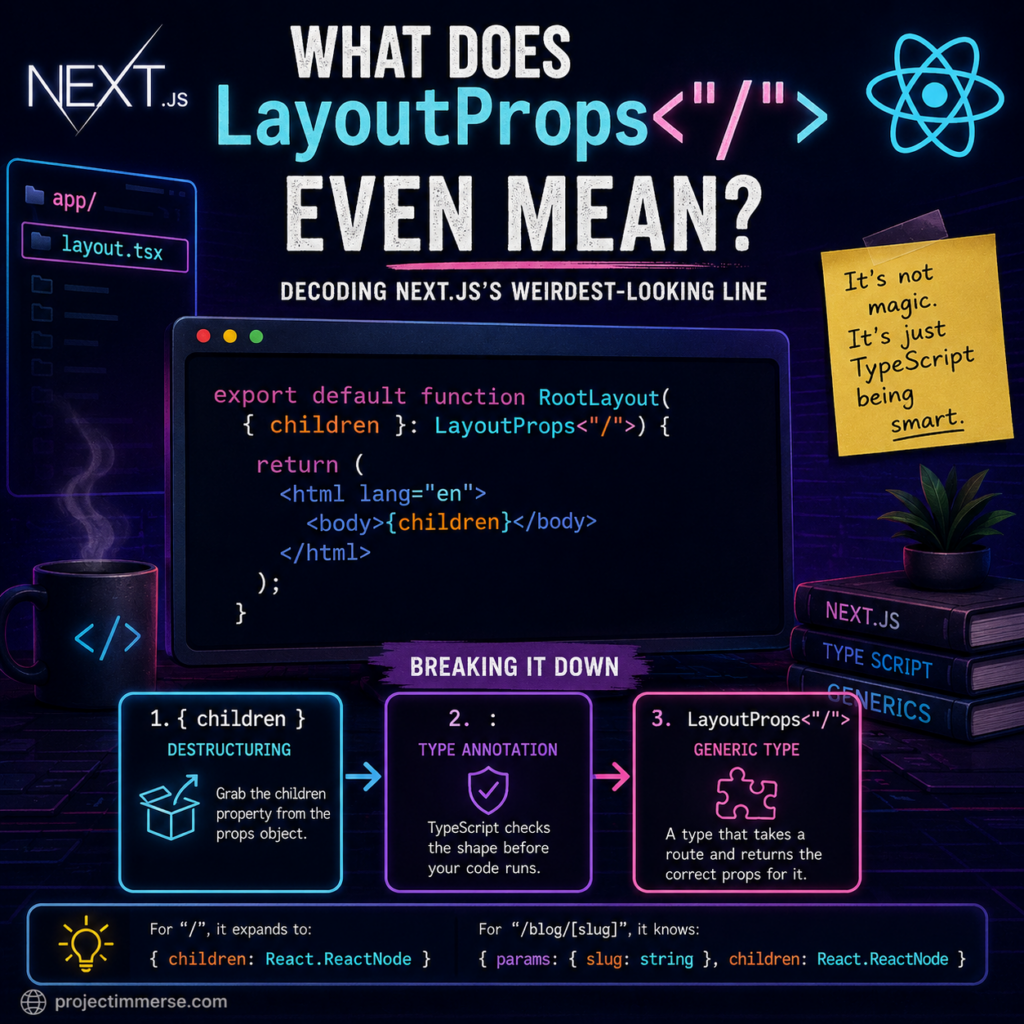
What Does LayoutProps<"/"> Even Mean? Decoding Next.js’s Weirdest-Looking Line

Next.js LayoutProps root layout explained with destructuring, TypeScript type annotations, and generic types.
What does LayoutProps<"/"> mean in Next.js? The syntax combines JavaScript destructuring, a TypeScript type annotation, and a route-aware generic type.

If you’ve recently created a Next.js app with the App Router and opened up app/layout.tsx, you’ve probably run into this line and quietly questioned your life choices:

export default function RootLayout({ children }: LayoutProps<"/">) {

It looks like someone fell asleep on their keyboard mid-generic. But don’t worry — nothing is broken, you didn’t mess up your install, and you don’t need to go back to plain HTML and pretend React never happened. Let’s take this line apart, piece by piece, until it stops looking like alien code and starts looking like a sentence.

Continue reading “What Does LayoutProps<"/"> Even Mean? Decoding Next.js’s Weirdest-Looking Line”

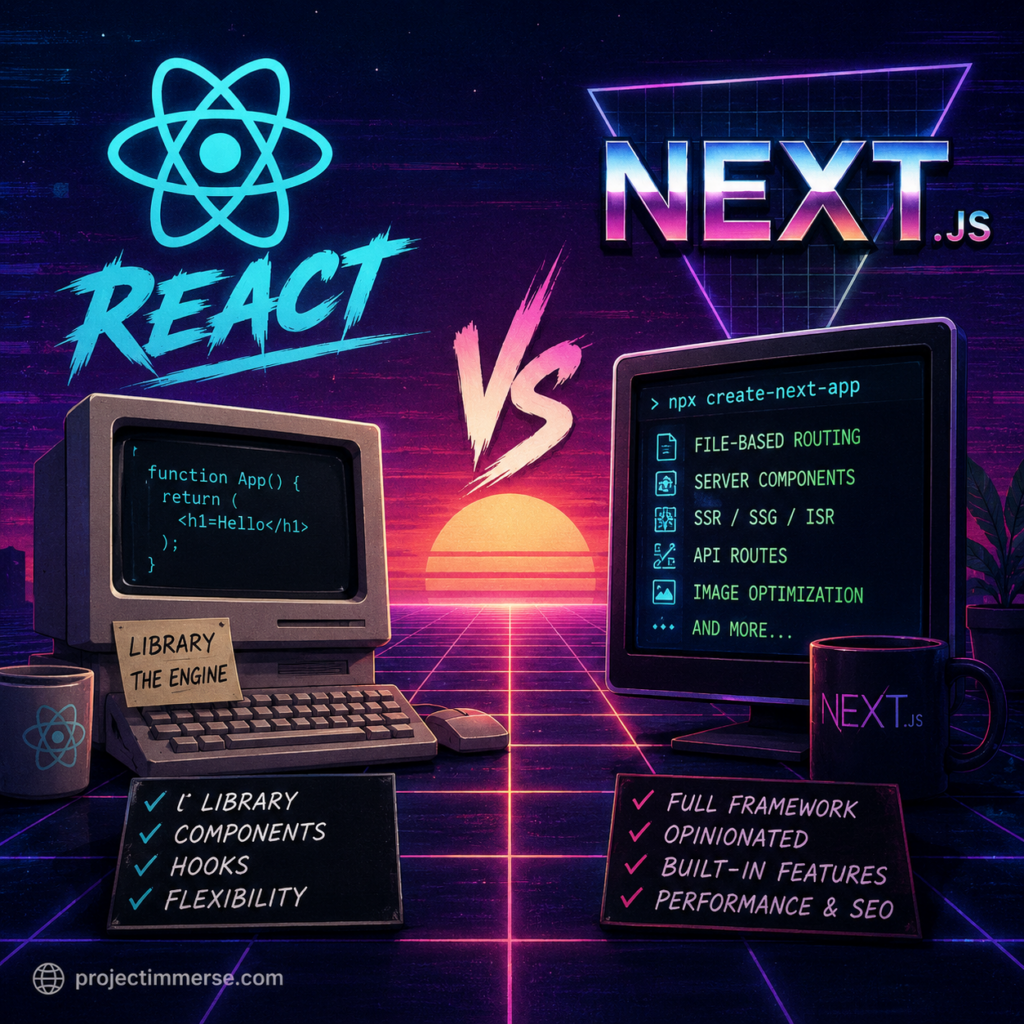
React vs. Next.js: What’s the Difference, and Why Should You Care?

React vs. Next.js comparison showing React as a UI library and Next.js as a full-stack framework
React vs. Next.js: comparing React’s flexible UI library approach with Next.js features like file-based routing, Server Components, and built-in performance tools.

If you’ve spent any time in the JavaScript ecosystem, you’ve probably noticed it has a personality disorder: it can’t stop reinventing itself. Just when you’ve made peace with React, along comes Next.js, acting like it’s here to “help,” and suddenly your useEffect hooks feel like they’re from the Stone Age. So let’s clear the fog. This article breaks down what React actually is, how Next.js builds on top of it, where directives and routing get weird, whether Express.js still has a job, and the pitfalls that trip up even experienced developers.

Grab a coffee. This one’s a bit of a read, but by the end you’ll actually understand the “why,” not just the “how.”

Continue reading “React vs. Next.js: What’s the Difference, and Why Should You Care?”

“X is not defined”: Fixing Next.js Import Errors Like a Human, Not a Panic Machine

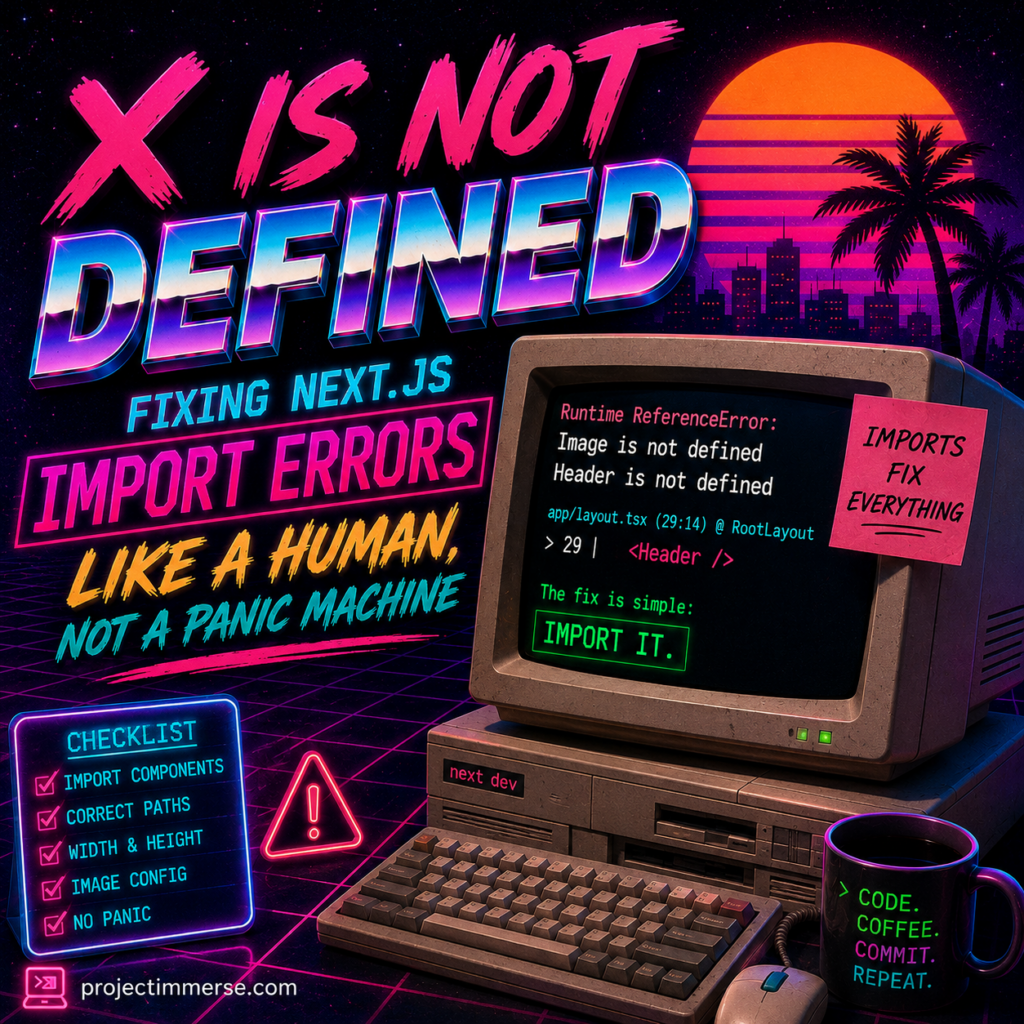
Fixing X is not defined import errors in Next.js and React
Getting “X is not defined” in Next.js? Check your component imports and import paths first.

There’s a special kind of dread that comes from running your app and seeing a big red ReferenceError: X is not defined where X is a component you know you wrote. You didn’t imagine it. It exists. It’s sitting right there in your project folder, judging you.

The good news: this error is almost always the same problem wearing a different costume. Let’s walk through it using two real examples — Image and a custom Header component — plus how to properly reference local images while we’re at it.

Continue reading ““X is not defined”: Fixing Next.js Import Errors Like a Human, Not a Panic Machine”

How to Find and Kill a Process by PID (Without Losing Your Mind)

How to find and kill a process by PID using terminal commands
Find the PID using a process or port lookup, then terminate the process from the command line.

If you’ve ever stared at a terminal that says Port 3000 is already in use and felt a small piece of your soul leave your body, this post is for you. Whether you’re running Next.js, a random Node script, or fifteen forgotten npm run dev processes from three weeks ago, learning to manage processes by PID will save you a restart, a Stack Overflow rabbit hole, and possibly your sanity.

Let’s break down what a PID actually is, how to find one, and how to (gracefully or violently) shut it down.

Continue reading “How to Find and Kill a Process by PID (Without Losing Your Mind)”

ADA vs. WCAG: What They Actually Mean for Your Code (Not Just Your Legal Team)

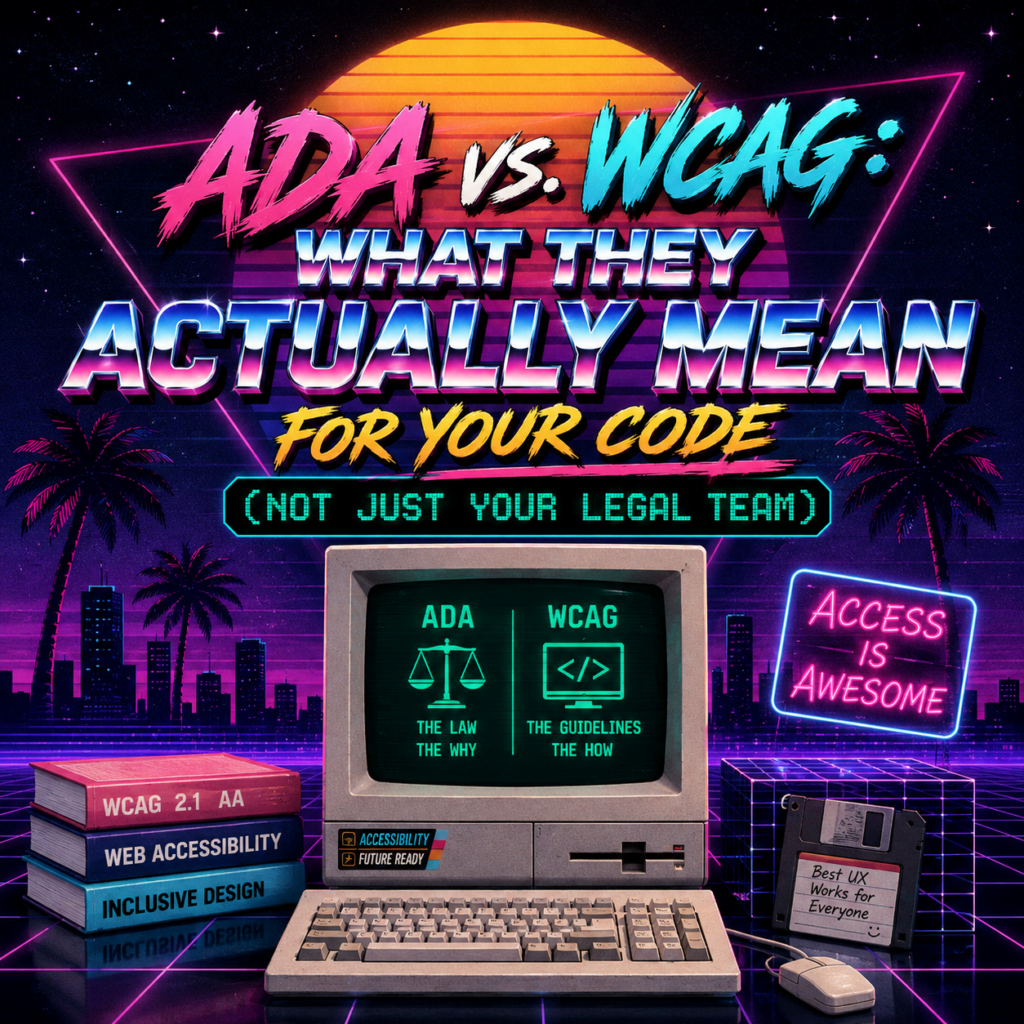
ADA vs WCAG web accessibility guide for developers
ADA vs. WCAG: understanding the difference between accessibility law and the technical guidelines developers use to build accessible websites.

If you’ve ever Googled “ADA compliant website” at 11 PM in a mild panic because a client mentioned a lawsuit, welcome. You’re in good company. Half the internet is having this exact crisis right now, usually right after someone from legal forwards an email with the subject line “URGENT – please read.”

Here’s the thing nobody explains clearly enough: ADA and WCAG are not the same thing, and mixing them up is like confusing “the speed limit” with “the laws of physics.” One is a rule humans made. The other is closer to how the universe (or in this case, assistive technology) actually works. You need both, but they do very different jobs.

Let’s sort this out — legal side first, then the part you’re really here for: what to actually put in your HTML.

Continue reading “ADA vs. WCAG: What They Actually Mean for Your Code (Not Just Your Legal Team)”

Why Some React & Next.js Projects Use “@” in Imports (And Some Don’t)

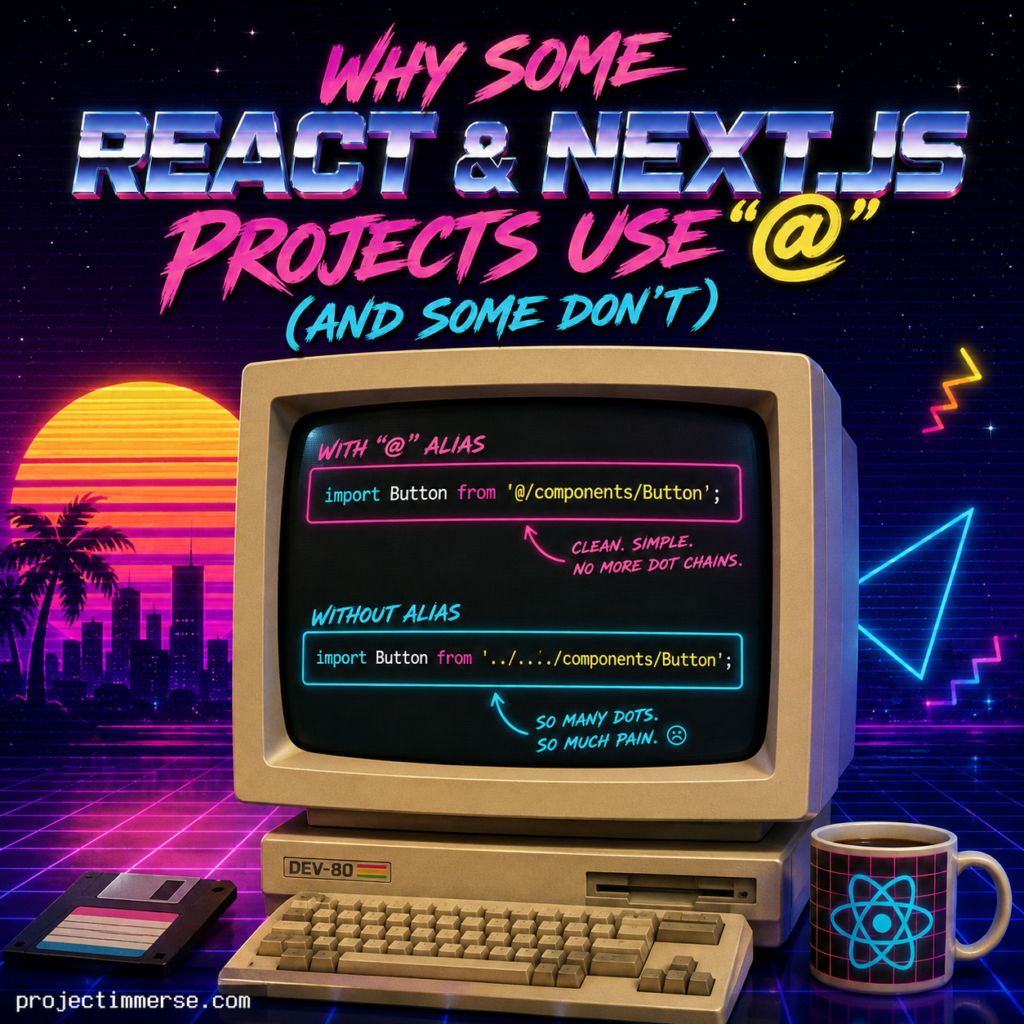
Illustration showing a React and Next.js path alias (@/) compared with traditional relative imports on a vintage CRT computer screen.
Visual comparing React and Next.js @ path aliases with traditional relative imports, illustrating why many developers prefer cleaner import paths.

If you’ve spent any time jumping between React or Next.js codebases, you’ve probably noticed something weird: some projects have imports like this —

js

import Button from '@/components/Button';

— and others look like this:

js

import Button from '../../../components/Button';

Same framework. Same language. Wildly different vibes. So what gives? Is the @ some secret JavaScript operator nobody told you about? A cry for help from a developer three folders too deep?

Not quite. Let’s clear it up.

Continue reading “Why Some React & Next.js Projects Use “@” in Imports (And Some Don’t)”

Design Patterns in PHP and JavaScript: A Guide for Humans Who Don’t Want to Read a Textbook

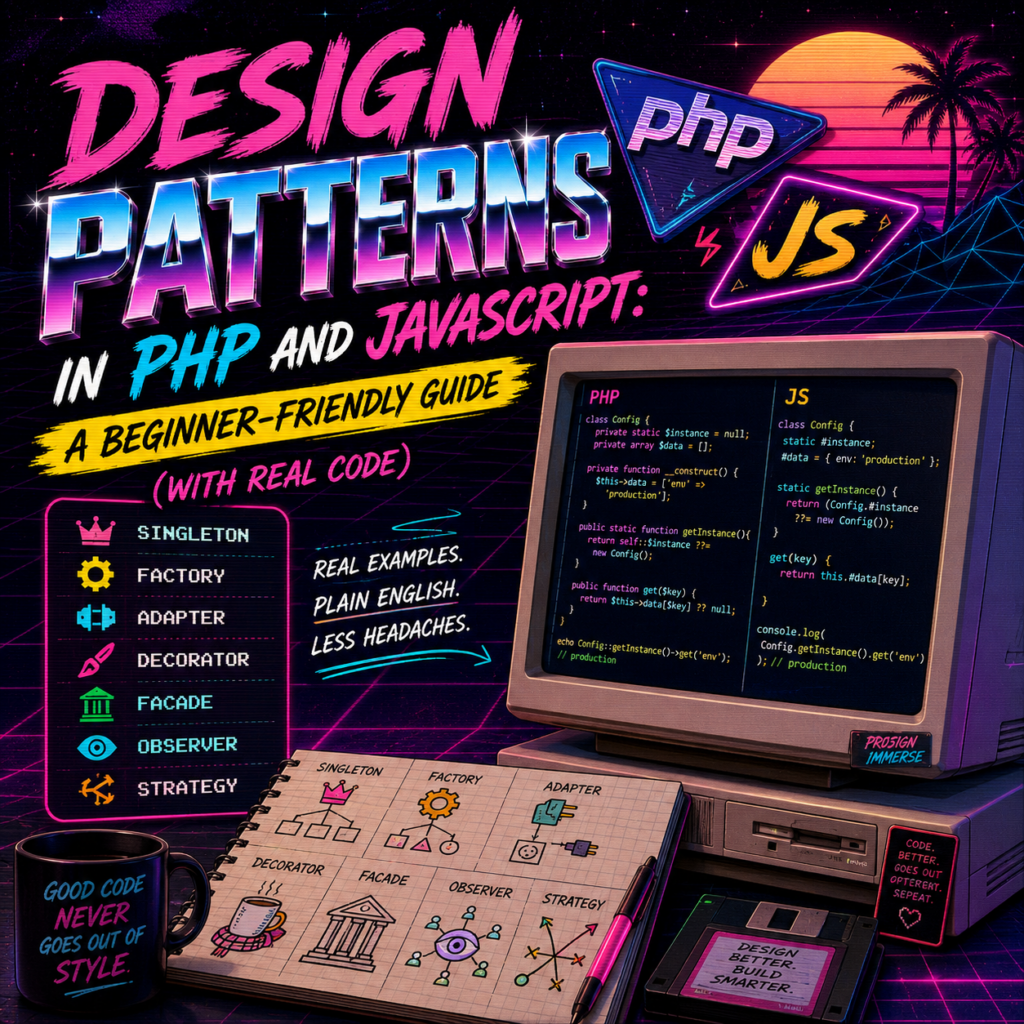
Illustration showing PHP and JavaScript design patterns with real code examples including Singleton, Factory, Adapter, Decorator, Facade, Observer, and Strategy.
Learn the most common PHP and JavaScript design patterns through practical code examples and memorable real-world analogies.

Let’s be honest: the moment someone says “design patterns,” a lot of developers mentally check out. It sounds like homework. It sounds like something a professor assigns right before a midterm you didn’t study for.

But here’s the good news — you already understand design patterns. You’ve been using them your whole life. You just didn’t know they had fancy names.

Ever used a vending machine? Congratulations, you understand the Factory pattern. Ever put a hat and scarf on a snowman? You’ve casually implemented the Decorator pattern. Ever said “just give me the chicken nuggets” instead of personally supervising a kitchen? That’s a Facade, my friend, and you nailed it.

Design patterns are just reusable solutions to problems that keep showing up in code. They’re not code you copy-paste directly — think of them more like recipes. The recipe for banana bread doesn’t care whose kitchen you’re in; the same logic applies whether you’re baking in PHP or JavaScript.

So let’s break these down properly — in plain English first, then in actual code, so you can see exactly where the “recipe” shows up in real projects.

Continue reading “Design Patterns in PHP and JavaScript: A Guide for Humans Who Don’t Want to Read a Textbook”

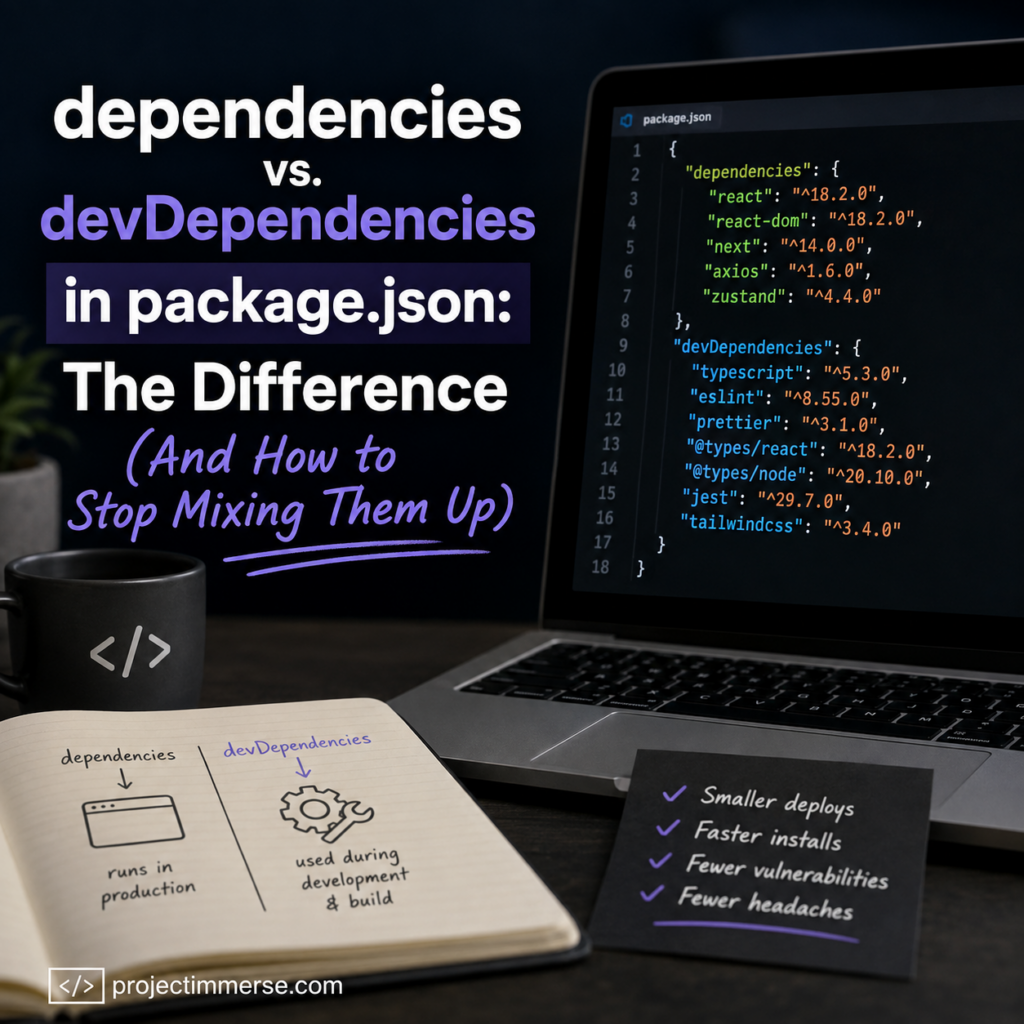
dependencies vs. devDependencies in package.json: The Difference (And How to Stop Mixing Them Up)

Laptop displaying a package.json file illustrating the difference between dependencies and devDependencies in a Node.js project.
Understanding when packages belong in dependencies versus devDependencies is one of the easiest ways to avoid frustrating deployment issues.

If you’ve ever run npm install on a fresh clone of a React or Next.js project and thought, “cool, I have literally no idea why half of these packages are in devDependencies and the other half aren’t” — congratulations, you’re a normal developer. This is one of those things that seems obvious until you actually have to explain it, at which point your brain quietly leaves the room.

Let’s fix that. By the end of this article, you’ll know exactly where a package belongs, why it matters more than you think, and how to stop guessing (or worse, copy-pasting from Stack Overflow and hoping for the best).

Continue reading “dependencies vs. devDependencies in package.json: The Difference (And How to Stop Mixing Them Up)”